

Banking Jobs After BCA 2026: Roles, Exams & Salary
Explore the best banking jobs after BCA in 2026. Check eligibility, bank exams, job roles, career scope, and salary details for BCA graduates.
 Swati Shakya18 Sept, 2026
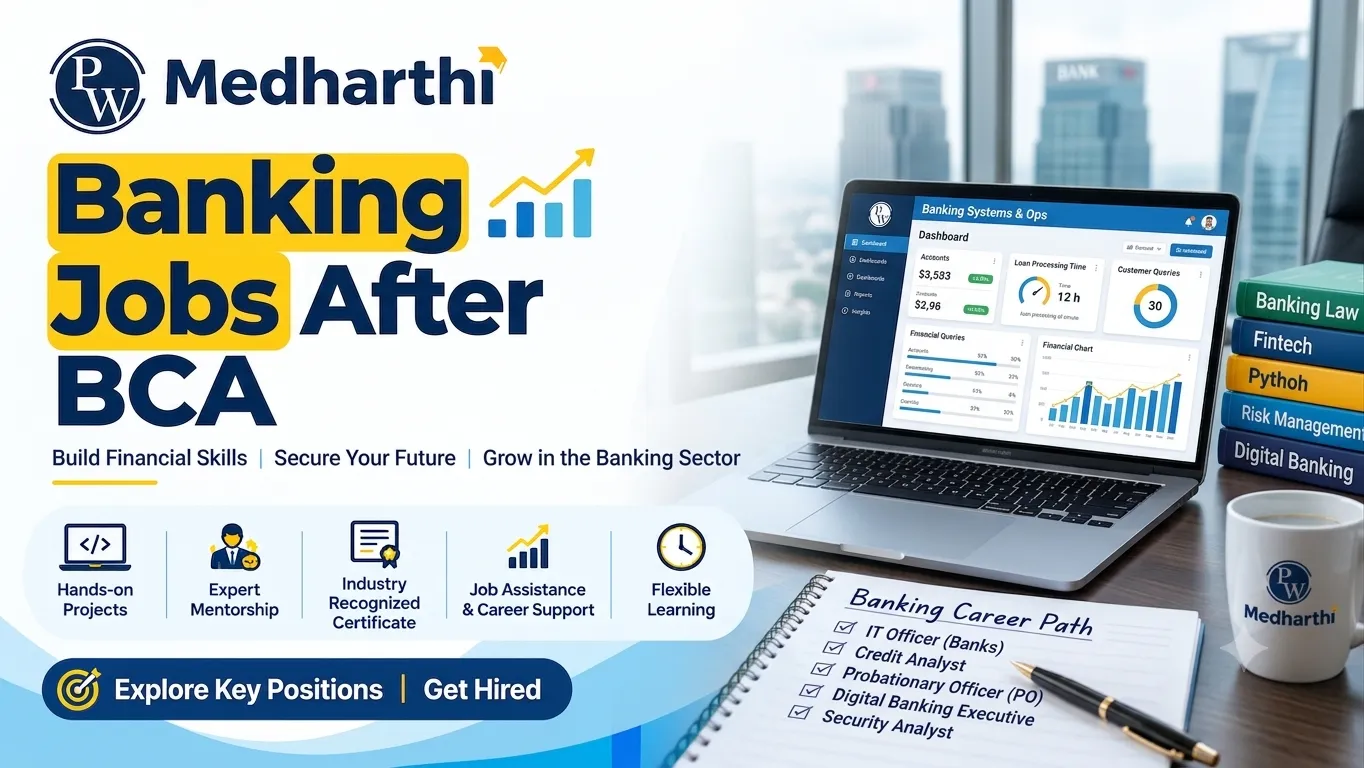
Banking jobs after BCA is a good way for students with a BCA degree who want to combine their technical skills with their knowledge of financial services. For tech-minded students, banking is one of the stronger career opportunities, where you can use your coding and data management talents in roles like IT Officer or Data Analyst.
Is a Banking Career Possible After BCA?
You might be wondering if a degree in computer applications is useful in the banking business. Yes, the answer is yes. These days, banks aren't just places to count money; they're also huge tech centers shaped by information technology. They require someone who know about databases, software, and security. Because BCA graduates bring an ability to work with databases, software, and security, you have a technological advantage that other business students may not have.
-
Core Focus: Applying IT solutions to banking operations.
-
Eligibility: Most banks require a minimum of 50-60% in your degree, along with key skills and soft skills that support banking readiness.
Best Job After BCA in Banking
Your particular interests will help you decide what the best employment is following BCA. If you enjoy coding, technical jobs are the greatest fit for you. If you like management, you could be better off in an administrative post.
Top Career Paths
-
IT Specialist Officer: One of the more practical private sector careers in banking for BCA graduates, managing the bank's internal software and hardware systems and sometimes moving into technical support for core systems and users.
-
Data Analyst: Using tools to interpret customer data and financial trends.
-
Cyber Security Consultant: Protecting the bank from digital fraud and hacking attempts.
-
Digital Banking Manager: Handling responsibilities tied to digital platforms, including e banking bca initiatives and mobile platforms.
After BCA Job Salary and Growth
When looking at an after BCA job salary, the numbers vary based on the sector. Government banks offer structured pay scales with many allowances, along with long term stability and better work life balance. Private banks might offer higher starting packages for top-tier talent; for example, HDFC Bank is often cited for performance-based incentives, and some companies reward strong performers faster.
| Job Role | Sector | Estimated Starting Salary (Per Annum) |
| IT Officer | Government | ₹4,80,000 - ₹6,50,000 |
| Bank Clerk | Government | ₹3,00,000 - ₹4,00,000 |
| Probationary Officer | Government | ₹5,50,000 - ₹8,00,000 |
| Technical Analyst | Private | ₹4,00,000 - ₹7,50,000 |
Growth in banking is usually merit-based. You can take internal departmental exams to get promoted quickly. Within five years, a dedicated tech graduate could build a rewarding career and move toward a successful career in senior managerial roles.
Government Jobs for BCA Students
After Bca Job in Bank- Securing government jobs for BCA students can lead to careers in the public sector, not just banks. These roles provide job security that is hard to find elsewhere. You get to work for prestigious institutions like SBI or RBI, including public sector banks. The competition is tough, but the rewards are worth the effort.
Most BCA government jobs involve maintaining the digital infrastructure of the branch.
-
SBI SO: Specializes in IT and systems.
-
IBPS PO: A general management role with high authority.
-
RBI Grade B: One of the most prestigious positions in the country.
-
RRB Officer: Serving the technical needs of rural banks.
Exams After BCA for Banking
To get in, you must pass certain exams after BCA, and these tests also help BCA students compete in the broader job market for banking roles. They check your logic, math, and English skills. Some also include a technical paper specifically for IT graduates.
The government exams after BCA are standardized across India. This means the syllabus is predictable.
| Exam Name | Conducting Body | Target Role |
| IBPS PO | IBPS | Probationary Officer |
| IBPS SO | IBPS | Specialist (IT) Officer |
| SBI PO | State Bank of India | Probationary Officer |
| RBI Assistant | Reserve Bank of India | Clerical/Assistant |
| IBPS Clerk | IBPS | Clerical Cadre |
You can also consider SSC CGL as another exam route for tech-oriented government roles beyond banking.
Can I Get Job After BCA?
Many students ask, "Can i get job after BCA without an MBA?" The answer is definitely yes. While higher education helps, it isn't a strict requirement for entry-level roles. You can enter the workforce immediately and choose options based on your career goals to gain practical experience.
-
Certification helps: Look into CCNA, cloud computing, or Java certifications.
-
Internships: Try to get a summer internship in a financial firm.
-
Networking: Connect with banking professionals on LinkedIn.
After BCA What Next in Tech?
If you want to stay in the tech side of finance, consider e banking BCA specializations. This involves working on UPI, net banking, and blockchain.
Tech Skills to Master
-
SQL & Databases: Crucial for managing customer records.
-
Cyber Security: Essential for preventing bank heists in the digital age.
-
Web Development: Necessary for maintaining the bank's portal.
-
Networking: To keep the branch computers connected.
BCA Job Opportunities in Government
BCA graduates can find career opportunities in government departments beyond banks. You can work in the Ministry of Finance or the Income Tax department. These roles often involve data processing and system maintenance.
| Department | Role | Responsibility |
| Income Tax | Tax Assistant | Processing digital returns |
| Indian Railways | IT Apprentice | Managing reservation systems |
| PSUs (like ONGC) | Junior Programmer | Maintaining internal ERPs |
The BCA govt jobs salary in these sectors is usually competitive. You also get benefits like medical insurance and pensions.
How to Get Job After BCA in Banking?
Knowing how to get job after BCA requires a step-by-step plan. You can't just apply and hope for the best. You need to align your skills with what the banking sector demands. Follow this simple checklist to get started.
-
Step 1: Complete your BCA with at least 60%.
-
Step 2: Choose between PO (General) or SO (Technical).
-
Step 3: Join a coaching center or use online resources for bank exams.
-
Step 4: Stay updated with current affairs and banking news.
Govt Jobs for BCA Freshers
Many govt jobs for BCA freshers are announced every year. You don't always need years of experience to apply. Entry-level clerk or assistant roles are great ways to get your foot in the door. Once you are inside the system, moving up is much easier.
We recommend freshers look at Regional Rural Banks (RRBs). These often have slightly lower competition than big city banks. It's a great way to start your career and serve the community
Banking Jobs After BCA FAQs
Can BCA students apply for SBI PO?
What is the starting salary for an IT Officer?
Is banking better than a software job for BCA?
Do I need to know commerce for banking?
Which exam is easiest for BCA students?




