

AI Agents in Clinical Medicine: Key Progress
 Prashant Pathak3 Aug, 2026
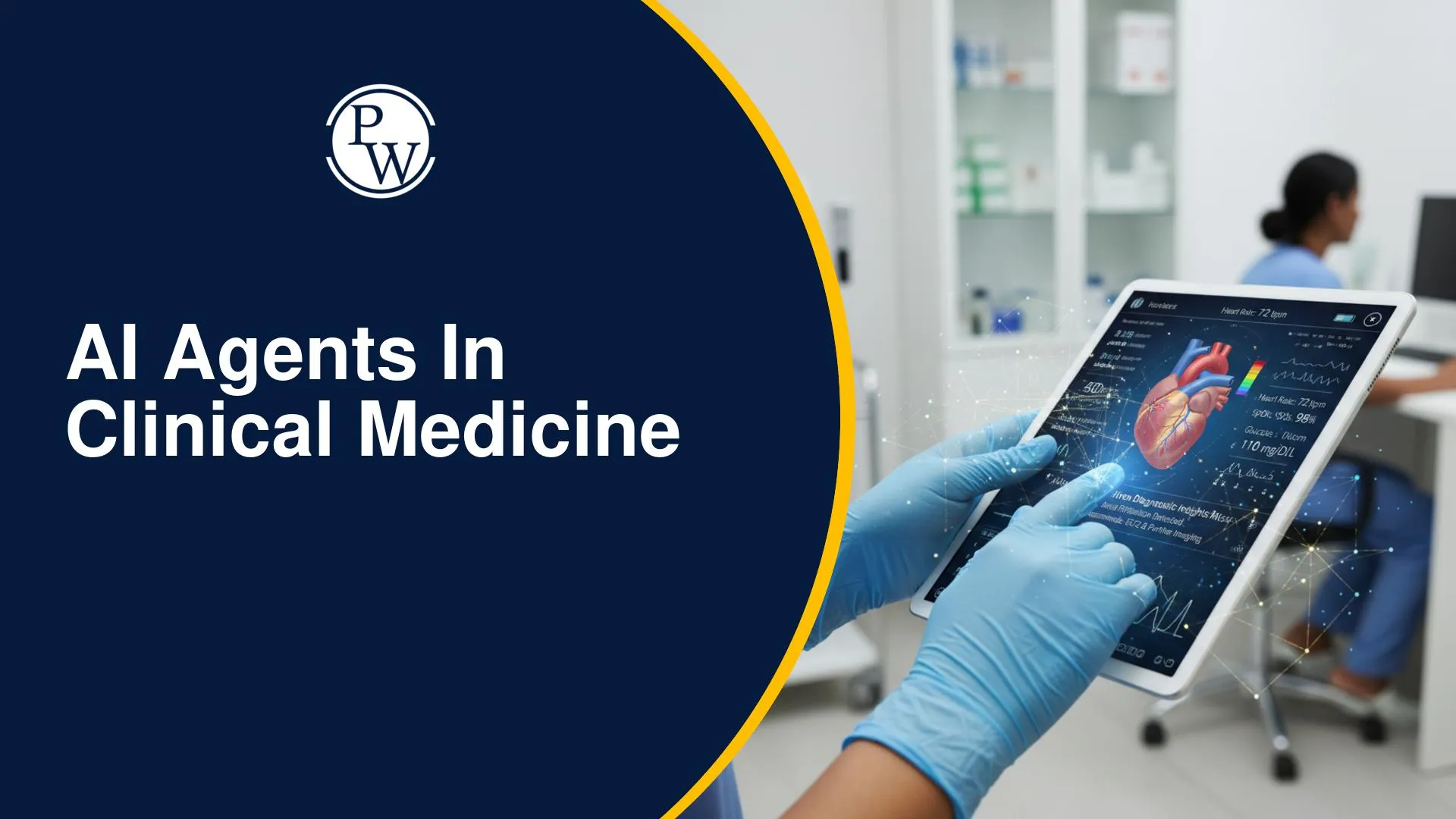
The field of clinical artificial intelligence saw significant advancements with the emergence of autonomous and semi-autonomous AI agents in clinical medicine during 2025–26. These intelligent systems go beyond simple predictions. They reason through multiple steps, access various data sources, and work with other AI or human experts. This integration marks a crucial development in enhancing healthcare operations and decision-making today.
Evolution of Clinical AI Agents
Traditional AI models usually give isolated predictions. In contrast, new AI agents in clinical medicine can perform complex tasks by reasoning sequentially. They can access external tools and data, and coordinate their actions. These capabilities allow them to handle more intricate clinical problems efficiently. This evolution makes AI agents more dynamic and useful in real-world medical settings.
Multiagent Frameworks and Performance
Multiagent frameworks are systems where several AI agents take on specialized roles, such as a diagnostician or pharmacist. They collaborate through structured protocols. These frameworks have shown early promise in benchmark evaluations. Diagnostic accuracy improvements over single-agent systems ranged from 7% to over 60%, depending on task complexity. For example, Microsoft’s AI Diagnostic Orchestrator (MAI-DxO), paired with OpenAI’s o3 model, achieved 85.5% accuracy on challenging diagnostic cases. This contrasts sharply with around 20% accuracy seen in practicing physicians under similar conditions.
Evaluating Agentic AI in Healthcare
New benchmarks now evaluate these advanced agentic systems. A 2025 review found 43 studies on agentic AI in healthcare, with 36 published that year. MedAgentBench, which tests large language model (LLM) agents in a virtual electronic health record (EHR) environment, evaluates performance across 300 clinical tasks. The top-performing model on MedAgentBench achieved a 69.7% task success rate. These results suggest that while AI agents have advanced features like tool use and iterative reasoning, the evidence base for reliable autonomous clinical AI agents in clinical medicine is still developing. The role of AI agents in clinical medicine is growing, but careful validation remains crucial.
AI Agents in Clinical Medicine FAQs
What are AI agents in clinical medicine?
How do multiagent frameworks improve diagnostics?
What is MAI-DxO?
How is the performance of AI agents evaluated?
Are fully autonomous clinical AI agents reliable yet?