
First Year Engineering Student? Here's What You Should Do to Get Ahead
 Aarti .20 Jun, 2026
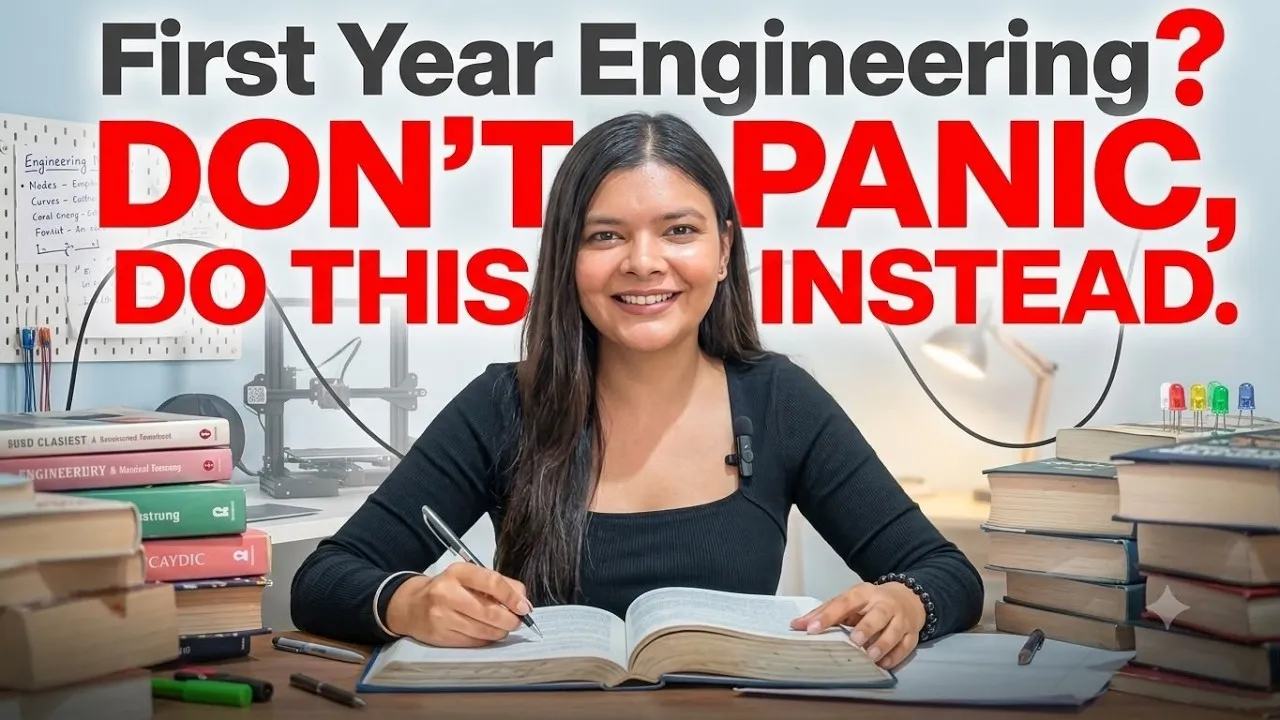
Starting engineering is an exciting opportunity to build habits that will shape your future career. In your first year, focus on understanding core subjects, maintaining consistent academic performance, and strengthening your problem-solving abilities.
Develop essential skills such as programming, communication, teamwork, and time management alongside your coursework. Participate in technical clubs, workshops, hackathons, and college events to gain practical exposure and expand your network. Explore different engineering domains before choosing a specialisation path.
Build a strong foundation in mathematics and fundamentals, as these concepts support advanced subjects later. Consistent learning, curiosity, and active involvement will help you stay ahead from the very beginning.
What Should First-Year Engineering Students Focus On?
As a first-year engineering student, you should focus on academics, skill development, networking, projects, internships, and career planning from the beginning. Check the points below to understand what you should do in your first year to build a strong foundation and stay ahead.
CGPA vs. Skills: Importance and Balance
A good CGPA helps you clear eligibility criteria for internships, placements, and higher studies, but employers also expect practical skills and projects. Recruiters initially use GPA as a filter, but then evaluate candidates based on their proof of work.
To maintain a balanced approach, aim for a safe CGPA band, typically 70% or 7.0 CGPA. Additionally, dedicate at least 5+ hours per week to developing small, public-facing projects. (Memory Tip: Remember, your degree gives you tickets, but projects are your VIP passes).
Choosing a Tech Stack and Learning Path in First Year
Avoid the common trap of trying to learn every technology. Instead, pick one path that aligns with your interests.
Here’s a guide to choosing a tech stack:
|
Interest Area |
Recommended Start |
|---|---|
|
Apps and Websites |
HTML, CSS, and JavaScript |
|
AI, Data Science, and Analytics |
Python and SQL |
|
Coding Fundamentals & Placements |
C++, Java, and DSA (Data Structures and Algorithms) |
The goal in the first year is not to become an expert in any specific tech stack. Your primary goal is to build strong basics and gain practical experience by creating two to three small projects.
Prioritising Skills Over Internships in First Year
During your first year, it is more beneficial to focus on building skills than on securing an internship.
This involves actively creating small projects based on your learning, participating in hackathons, and starting to build your portfolio. This foundational work is crucial because when real opportunities arise, you will need tangible work to showcase.
Building a Personal Brand and Networking
Consistently showcasing your projects, learnings, achievements, and hackathon participation online is key to building your personal brand. Regularly updating platforms like LinkedIn, YouTube, and Instagram increases your visibility, helps build your network, and can lead to significant opportunities.
Introversion is not a disadvantage. Communication skills improve with practice, and networking provides a natural way to practice. Engage by joining clubs, attending workshops, and participating in hackathons. Also, actively engage with seniors and mentors. This iterative process will gradually strengthen your communication skills, boost your confidence, and build a strong network.
Embracing Failure as Feedback
Failure is a normal part of college life. Experiences such as backlogs, rejected internship applications, or unsuccessful hackathons should be viewed as feedback, not as final results.
The crucial step is to focus on identifying where mistakes occurred and learning how to improve for the next attempt.
Practical Project Ideas for First-Year Students
The aim is to create projects that effectively showcase your learning. Begin with simple, manageable projects such as developing a portfolio website, creating a basic data dashboard, building a to-do list application, or designing a simple calculator.
You could also develop a basic solution to any real-life problem you identify. The ultimate goal is not to build fancy projects, but rather to apply your learning in a practical context.
Recommended First-Year Plan (Timeline)
Here is a structured plan to guide your first year:
-
Months 1-3: Settle into college life, maintain a good CGPA, and learn one programming language.
-
Months 4-6: Complete DSA (Data Structures and Algorithms) OR the basics of your chosen domain.
-
Months 7-9: Build one or two projects, participate in hackathons, and join clubs.
-
Months 10-12: Update your LinkedIn and GitHub profiles, showcase your work, and apply for internships or other opportunities.
First Year Engineering Journey FAQs
Why is a good CGPA important in the first year of engineering?
Should a first-year engineering student try to learn all tech stacks?
What is more important for a first-year student: an internship or building skills?
How can a first-year student build a personal brand and network?
How should first-year students view failure?
Should first-year engineering students create a GitHub profile?