
VLSI Design & Chip Engineering Degree vs HRM Online Degree: Which One Actually Fits Your Career Goals?
 Mishika Gupta16 Oct, 2026
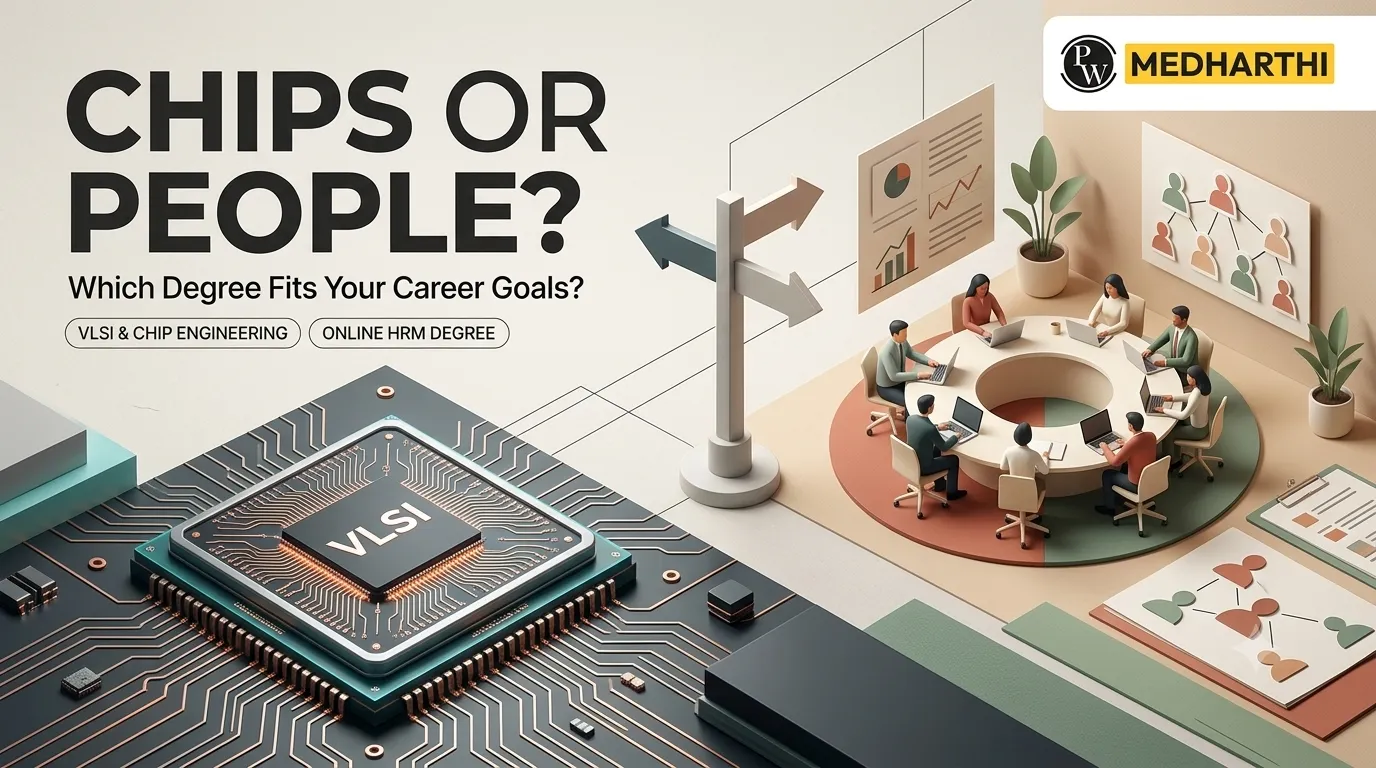
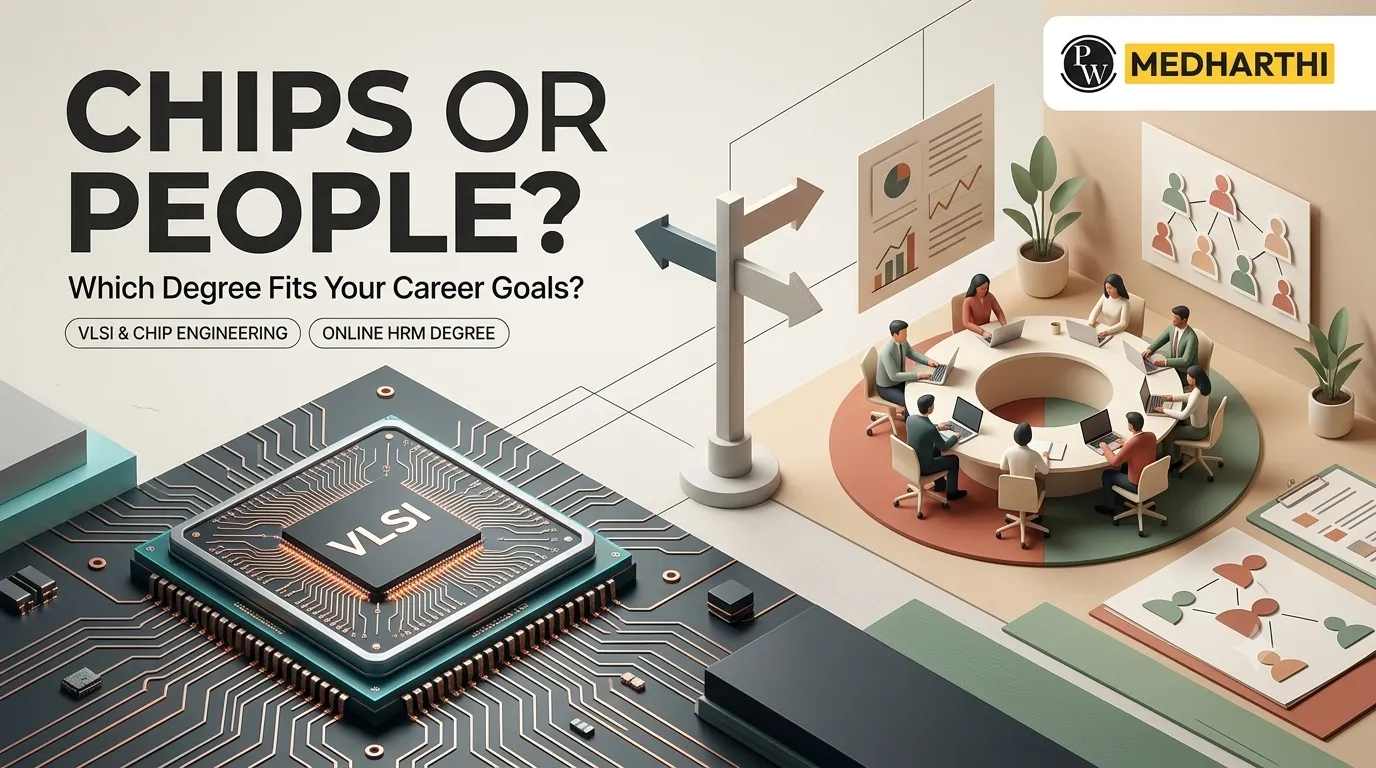
Imagine designing the chip inside a smartphone versus helping a company build its people strategy. One career works with circuits, code and silicon; the other works with talent, culture and business growth.
That is the real difference between a VLSI Design & Chip Engineering degree and an HRM online degree. VLSI prepares you for chip design, verification and semiconductor roles, while HRM prepares you for people management, talent development and organisational leadership.
Both can lead to strong careers, but only one may truly match your interests, strengths and long-term goals.
So, which path fits you better? Let’s find out.
VLSI vs Online HRM: Choosing Between Chip Design and People Management
A VLSI (Very Large Scale Integration) degree prepares you to work on the hardware that powers electronic devices. VLSI deals with designing integrated circuits that can contain millions or billions of transistors.
An HRM online degree prepares you to manage people and organisational systems. It generally covers talent management, employee relations, compensation, learning and development, HR analytics, compliance and business strategy.
Think of it this way:
-
VLSI asks: How can we design, test and improve a chip?
-
HRM asks: How can we build, support and develop a productive workforce?
Both fields can offer strong career opportunities, but the right choice depends on the kind of problems you enjoy solving.
"VLSI builds the technology inside modern devices, while HRM builds the people practices that help organisations perform."
Curious About Chip Design? Here’s What You’ll Learn in a VLSI Degree
A VLSI Design & Chip Engineering degree takes you through the process of designing, testing and implementing integrated circuits. Depending on the programme, core areas may include:
-
Digital and analog electronics
-
Semiconductor devices and CMOS design
-
Computer architecture
-
Verilog or VHDL
-
RTL design and verification
-
Physical design
-
EDA tools and simulation
Practical work may involve designing digital blocks, writing RTL code, building testbenches, running simulations and checking functional or timing requirements.
"VLSI turns circuit-level concepts into working chip designs through a mix of electronics, coding, simulation and rigorous verification."
The field suits learners who enjoy mathematics, electronics, logical reasoning and technical problem-solving, particularly those from electronics, electrical, computer engineering or related backgrounds.
Love Working with People? Explore What an Online HRM Degree Covers
An online HRM degree combines people management with business and organisational practices.
"Online HRM combines people management, business knowledge and data-driven decision-making for today’s workplace."
|
Area |
What You Learn |
|
Talent Management |
Recruitment, workforce planning and employee development |
|
Performance Management |
Goal setting, performance evaluation and improvement |
|
Compensation & Benefits |
Pay structures, incentives and employee benefits |
|
Employee Relations |
Engagement, workplace concerns and organisational culture |
|
HR Analytics |
Using workforce data to support HR decisions |
|
Employment Law |
Labour regulations and workplace compliance |
Practical learning may include case studies, HR policy assignments, workforce-planning exercises and people-analytics projects.
Which Career Path Matches Your Interests and Strengths?
The right choice depends on the kind of work you want to pursue and the skills you enjoy using.
|
Consider this |
VLSI may suit you if… |
HRM may suit you if… |
|
Problem-solving |
You enjoy circuits, coding, debugging and simulation. |
You enjoy communication, people-related challenges and business processes. |
|
Career focus |
You want to work with chips, SoCs, FPGAs or semiconductor systems. |
You want to work in talent management, employee relations and people strategy. |
|
Work style |
You prefer technical depth and specialised engineering work. |
You prefer working across teams and business functions. |
|
Work environment |
You are drawn to design, testing, hardware and EDA tools. |
You enjoy working with employees, managers and business stakeholders. |
If you are comparing both paths, the PW Medharthi Career Fit Finder can help you assess your interests and strengths before shortlisting a programme.
You can also get a clearer idea of employer expectations by looking at openings such as Fujitsu’s full-stack developer roles, which list skills like Java and React.
"Your interests, strengths and preferred work environment can help you decide whether VLSI or HRM is the better career fit."
VLSI Degree Career Options: Chip Design, Verification and Semiconductor Roles
A VLSI degree can prepare you for specialised roles across the chip-design lifecycle. These roles differ in focus: some involve creating designs, while others focus on testing, layout, timing or manufacturing readiness.
"VLSI offers career paths across the chip development lifecycle, from circuit design and verification to physical implementation and testing."
Common career paths include:
-
VLSI Design Engineer: Designs digital or analog circuit blocks using HDLs and design tools.
-
Verification Engineer: Checks whether a chip design behaves as intended through simulation, testbenches and verification planning.
-
Physical Design Engineer: Works on floorplanning, placement, routing, timing closure and chip layout.
-
DFT Engineer: Adds and verifies test structures that help detect manufacturing defects.
-
FPGA Engineer: Designs and implements digital systems on programmable hardware.
-
Analog/Mixed-Signal Engineer: Works on circuits that process real-world signals such as power, audio or sensor data.
Job listings frequently mention skills such as RTL design, SystemVerilog, UVM, verification planning, synthesis, floorplanning, clock tree synthesis, routing and static timing analysis. Reviewing current job descriptions can help you understand which technical skills employers expect.
For example, the growing demand for AI skills is also reflected in Krutrim’s AI engineering hiring, where roles require specialised technical expertise.
HRM Online Degree Career Options: Talent, People and Business Roles
"An online HRM degree can open career paths in recruitment, employee development, workplace relations and people strategy across industries."
An online HRM degree can prepare you for people-focused roles across industries, from recruitment and employee development to workforce planning and HR analytics.
-
HR Generalist: Manages recruitment, employee records and day-to-day HR operations.
-
Talent Acquisition Specialist: Sources, evaluates and hires suitable candidates.
-
HR Business Partner: Aligns HR practices with business goals.
-
Compensation and Benefits Manager: Oversees salary structures, incentives and employee benefits.
-
Learning and Development Manager: Plans employee training and career-development programmes.
-
Employee Relations Manager: Handles workplace concerns, policies and employee engagement.
-
HR Analytics Specialist: Uses workforce data to analyse hiring, attrition and employee performance.
The roles available to you will depend on your qualifications, experience and the employer’s requirements.
Key Takeaways
-
VLSI focuses on chip design and semiconductor technology, while HRM centres on people management and business strategy.
-
Your interests and strengths can help you choose between technical engineering work and people-focused business roles.
-
VLSI offers career paths in chip design, verification and FPGA engineering, while HRM opens opportunities in recruitment, employee relations and HR analytics.
-
Practical projects, tools and case studies help you assess the learning opportunities available in each programme.
-
Comparing the curriculum, eligibility, degree recognition, learning format and total fees can help you make an informed choice.
VLSI vs HRM: Which Degree Aligns with Your Career Goals?
Your choice between VLSI and HRM depends on the skills you want to develop, the work you enjoy and the career you want to pursue. Compare the key differences before choosing a programme.
“Choose VLSI if you want to build semiconductor technology; choose HRM if you want to shape people, teams and workplace strategy.”
|
What to Compare |
Online HRM Degree |
|
|
Core focus |
Chip design, digital electronics and semiconductor systems |
Talent management, employee relations and people strategy |
|
Key skills |
Digital logic, HDL coding, verification and EDA tools |
Communication, leadership, HR analytics and employment compliance |
|
Practical learning |
Chip-design projects, simulations, FPGA work and verification |
HR case studies, people-analytics projects and business simulations |
|
Career options |
VLSI design, verification, physical design, DFT and FPGA engineering |
HR generalist, talent acquisition, HR business partner and learning and development |
|
Ideal interests |
Electronics, coding, circuits and hardware systems |
People management, business operations and employee development |
|
Learning flexibility |
Depends on course delivery, lab access and project requirements |
Online delivery may offer greater flexibility alongside work or other commitments |
|
Fees and recognition |
Check total fees, awarding institution and applicable approvals |
Check total fees, degree recognition and applicable approvals |
Beyond core chip-design roles, the technology sector also offers specialised opportunities, such as Arm’s cybersecurity hiring in Bengaluru.
Make the Right Choice for Your Future Career
Your career journey begins with a choice that reflects who you are and where you want to go. If you’re fascinated by electronics, circuits and semiconductor innovation, a VLSI Design & Chip Engineering degree could help you work towards a future in chip design and technology. If you’re passionate about people, leadership and building stronger workplaces, an online HRM degree may be a better match for your ambitions.
But before you take the next step, look beyond the degree title. Compare the curriculum, practical learning opportunities, eligibility requirements, degree recognition and overall cost to understand what each programme offers.
The right degree isn’t simply the one with promising career prospects; it’s the one that aligns with your strengths, fuels your interests and moves you closer to your goals. Take the time to explore your options, assess your career fit and make a choice you can grow with.
Your future starts with the decision you make today