
MCA vs Software Engineering: Key Differences Explained
 Kishor Kumar Bairagi17 Jul, 2026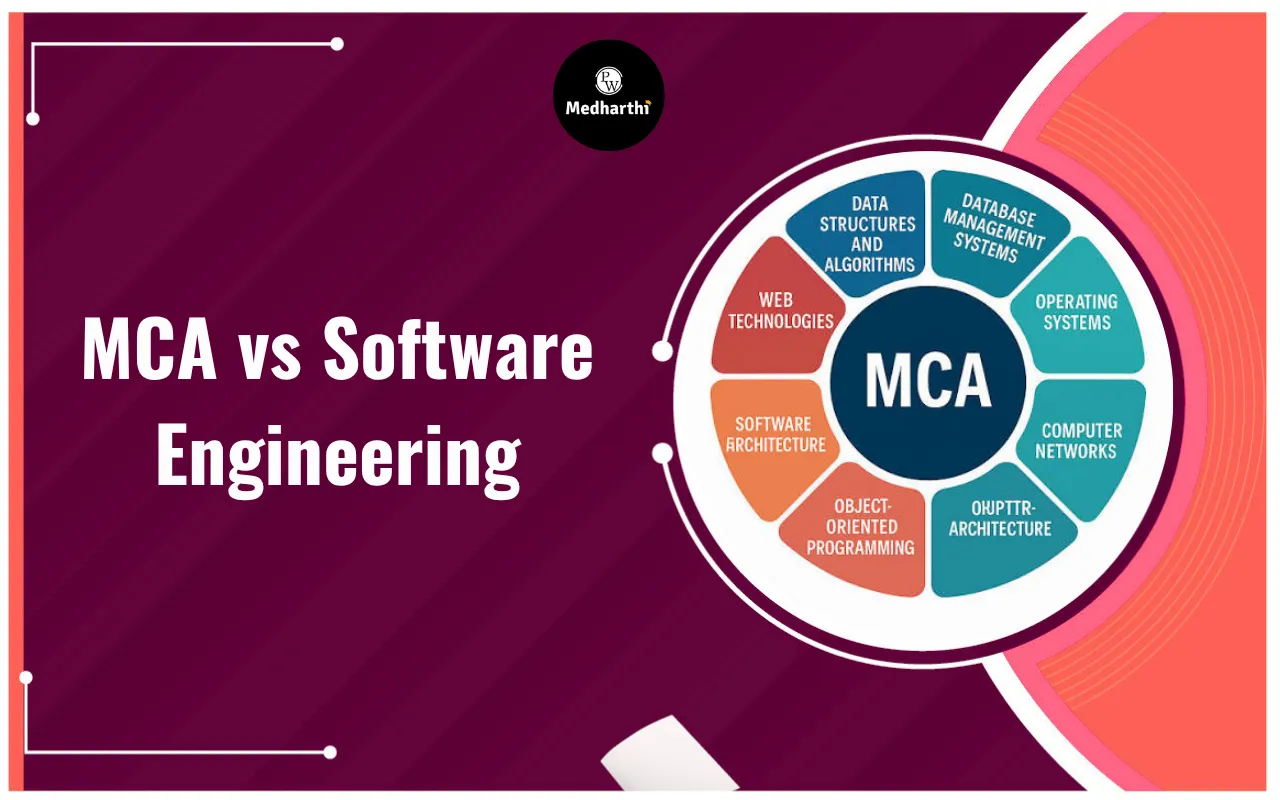
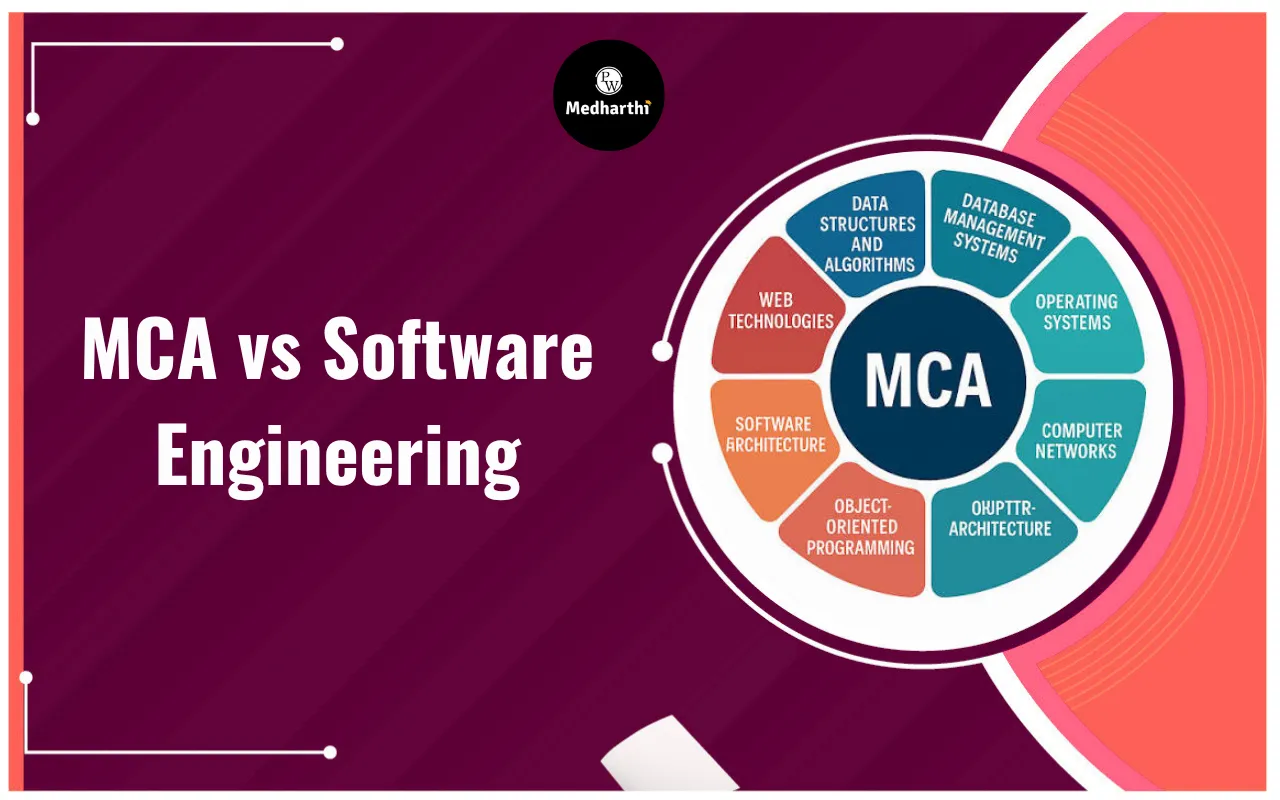
The main MCA vs Software Engineering difference lies in their academic focus. An MCA is a graduate degree specializing in computer applications and system development. Conversely, Software Engineering is focused on designing and building robust software. Your specific career goals and technical interests will determine the right path.
1. What is MCA vs Software Engineering Difference?
-
MCA: A professional postgraduate degree focusing on computer applications to solve business problems.
-
Software Engineering: An engineering discipline using technical principles to design and maintain systems.
-
Duration: MCA is a graduate course; Software Engineering is typically a B.Tech specialization or a job title.
-
Entry: MCA requires a prior bachelor’s degree.
Key Differences
| Feature | MCA (Master of Computer Applications) | Software Engineering (Engineering Branch) |
| Core Nature | A postgraduate academic degree. | A specialized branch of engineering. |
| Primary Goal | Mastering application development. | Designing scalable software systems. |
| Typical Entry | Post-graduation (after BCA/B.Sc). | Undergrad (B.Tech) or specific role. |
2. Is MCA Equivalent to BTech?
Many students ask, is Online MCA equivalent to BTech in the current job market? MCA as being on par with a B.Tech in Computer Science because both cover advanced programming and logic.
-
Job Eligibility: Most tech giants treat MCA graduates similarly to B.Tech holders for entry-level roles.
-
Technical Depth: MCA focuses heavily on the application layer, while B.Tech often dives deeper into hardware.
-
Academic Progression: Since MCA is a master's, it may be preferred for teaching or research roles.
Comparing Qualifications
-
MCA: Best if you have a non-engineering background but want a high-level IT career.
-
B.Tech: The standard path for those starting directly after high school.
-
The Verdict: Companies usually don't discriminate between the two for software developer positions.
3. Understanding the MCA Artery
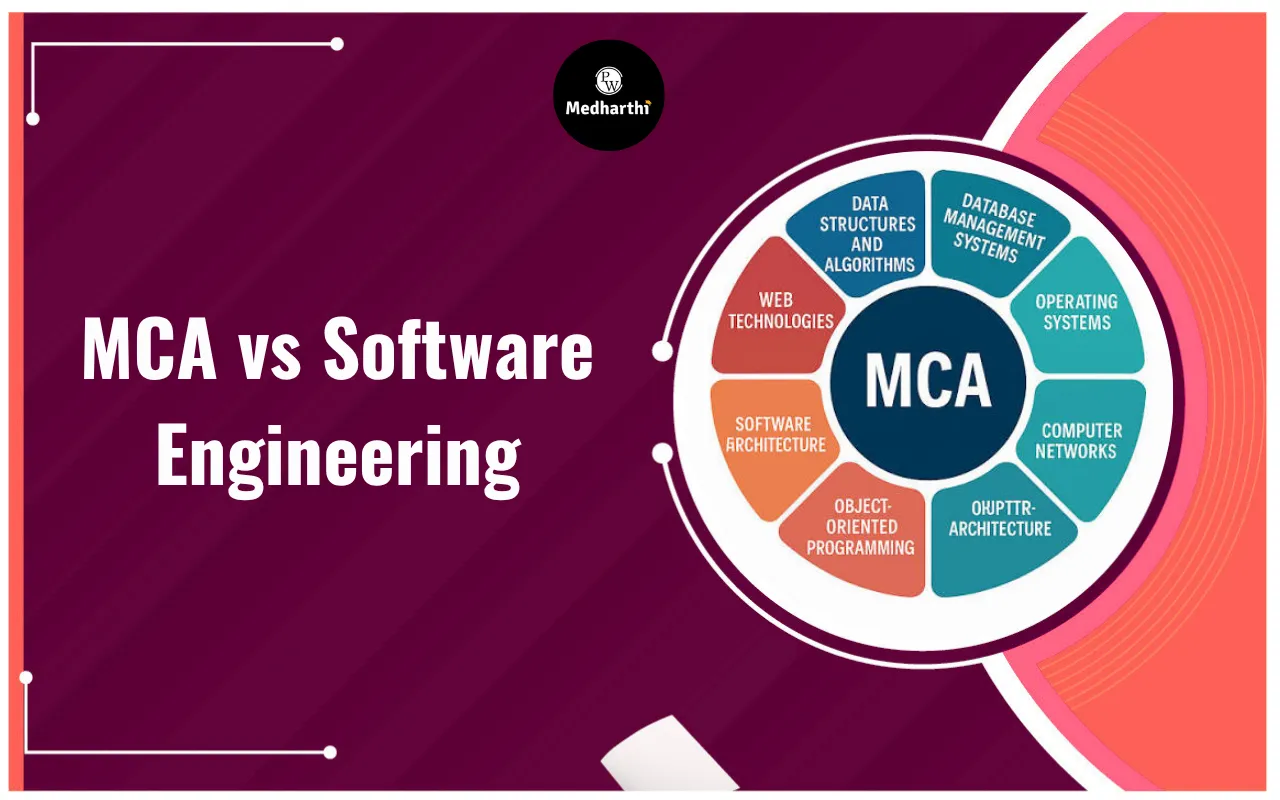
The MCA artery serves as the primary route connecting computer science theory with real-world business management. The curriculum flows from foundational basics to data structures and project management. This industry-integrated path emphasizes how software serves corporate environments, offering specializations in networking, database management, and mobile applications.
Subjects in the MCA
-
Programming Languages: Mastery of C, C++, Java, and Python.
-
Database Management: Learning how to store and retrieve data efficiently.
-
System Analysis: Understanding how to design systems that meet specific user requirements.
-
Network Security: Protecting the digital infrastructure from external threats.
4. Exploring the MCA Engineering Connection
While not an engineering degree, the MCA engineering connection is strong. Overlapping curricula ensure students gain technical expertise similar to computer science engineers for building systems.
-
Logic Building: Both paths require a deep understanding of algorithms.
-
Mathematics: You'll use discrete math and statistics in both fields.
-
Project Life Cycle: MCA students learn the Software Development Life Cycle (SDLC), just like engineers.
Technical Skills
|
Skill Area |
MCA Coverage |
Engineering Coverage |
|
Algorithms |
High focus on implementation. |
High focus on theoretical complexity. |
|
Architecture |
System-level understanding. |
Hardware-software interface focus. |
|
Coding |
Heavy emphasis on application. |
Emphasis on efficiency and optimization. |
5. Diving Into MCA IT Roles
The MCA IT landscape offers a wide variety of roles that aren't just limited to coding. Because the degree is broad, you can find your niche in several departments. We often see MCA graduates excelling in roles that require a mix of technical skill and coordination.
-
System Analyst: Bridging the gap between the client and the developers.
-
Database Administrator: Managing the vast amounts of data a company generates.
-
IT Consultant: Advising businesses on how to use technology to meet their goals.
Career Paths for MCA Graduates
-
Web Development: Creating the digital face of modern businesses.
-
App Development: Building the mobile tools we use every day.
-
Cloud Computing: Helping companies move their infrastructure to the internet.
6. The World of MCA Software Engineering
In an MCA software engineering specialization, you earn a master’s degree focused on building and managing entire software systems, mastering both coding and project management for today's tech-driven world.
-
Design Patterns: Learning the best ways to structure your code.
-
Quality Assurance: Ensuring the software works perfectly before it reaches the user.
-
Maintenance: Fixing bugs and adding new features over time.
Why Choose Software Engineering within MCA?
-
High Demand: Companies are always looking for skilled developers.
-
Creative Problem Solving: Every project presents a new puzzle to solve.
-
Global Opportunities: Software skills are the same everywhere in the world.
7. Analyzing MCA Software Engineering Salary
One of the biggest concerns for students is the MCA Software Engineering salary potential. Typically, your starting salary may be influenced by your college reputation, your skills, and the location of the job. It's a field that rewards expertise and continuous learning.
-
Entry Level: Usually offers a competitive starting package in the IT sector.
-
Mid-Level: Salaries often grow significantly once you have 3-5 years of experience.
-
Senior Level: Highly experienced engineers can command very high compensation packages.
Expected Salary
| Experience Level | Typical Salary Range (Annual) | Key Factors |
| Fresh Graduate | Moderate/Competitive | Skillset, Internship experience. |
| 3-5 Years | High Growth | Specialization, Project success. |
| 10+ Years | Premium | Leadership, Architectural knowledge. |
8. Comparison of Skills Required
To understand the MCA vs Software Engineering difference, we must look at the skills you'll need for each. One path might favor management and application, while the other favors raw engineering and optimization. Both, however, require a strong logical mind.
-
Coding Proficiency: Non-negotiable for both paths.
-
Communication: Vital for MCA graduates who often interface with clients.
-
Analytical Thinking: Necessary for engineers to solve complex architectural issues.
Skill Matrix
-
Soft Skills: Teamwork, communication, and time management.
-
Hard Skills: Java, Python, SQL, and Cloud platforms.
-
Process Skills: Agile, Scrum, and DevOps methodologies.
9. MCA vs BTech
An MCA is a marathon that begins after a preliminary race (your bachelor's). Software engineering is often a sprint that starts right after school.
-
MCA Route: BCA -> MCA (Total 5-6 years of higher education).
-
Engineering Route: B.Tech (4 years of higher education).
-
Flexibility: MCA allows students from various backgrounds to enter the tech field.
10. Industry Preference: Who Gets Hired?
Does the industry care about the MCA vs Software Engineering difference? Tech companies care about what you can do. If you can pass the technical interview and show a strong portfolio, your degree title becomes secondary.
-
Product Companies: May lean towards B.Tech for core system roles.
-
Service Companies: Often hire MCA and B.Tech graduates equally.
-
Startups: Value skills and "hustle" over specific degree titles.
11. Role of Internships
Regardless of your path, getting real-world experience is vital.
-
Practical Application: Apply what you learned in your MCA or Engineering classes.
-
Networking: Meet people who can help you find a job later.
-
Resume Building: Show future employers that you have worked on real projects.
12. Future Trends in MCA and Engineering
Both MCA and software engineering are evolving to include new fields like AI, Machine Learning, and Blockchain. Staying updated is the only way to remain relevant.
-
AI Integration: Learning how to build smarter software.
-
Cybersecurity: Protecting data in an increasingly connected world.
-
Remote Work: The ability to work for global companies from your home.
Success Tips
-
Keep Learning: Don't stop once you get your degree.
-
Build a Portfolio: Showcase your projects on GitHub.
-
Stay Curious: Always look for new ways to solve old problems.
Top universities, fees, and eligibility to help you choose the best path for your career in software engineering.
| College Name | Course Name | Fees (Approx.) | Admission Process | Eligibility |
| Amrita Vishwa Vidyapeetham | MCA | ₹1,40,000 | Check Official Website | At least 50% aggregate marks in graduation with Mathematics at 10+2 |
| Sharda University | MCA (Data Science) | ₹1,00,000 | Check Official Website | Passed Bachelor’s Degree of minimum 3 years duration |
| Chandigarh University | MCA in Cybersecurity | ₹1,40,000 | Check Official Website | 50% in Graduation (45% for reserved category) |
| Mangalayatan University | MCA (Artificial Intelligence and Machine Learning) | ₹67,000 | Check Official Website | Bachelor's degree with Minimum 45% marks |
MCA vs Software Engineering FAQs
What is the main difference between MCA and Software Engineering?
Is MCA equivalent to B Tech for government jobs?
Can an MCA student become a Software Engineer?
Which has a better salary, MCA or Software Engineering?
Is it hard to shift from MCA to a core engineering role?