
Internships Are Becoming a Stronger Route to Full-Time Jobs as Pre-Placement Offers Rise
 Avisha Das16 Oct, 2026
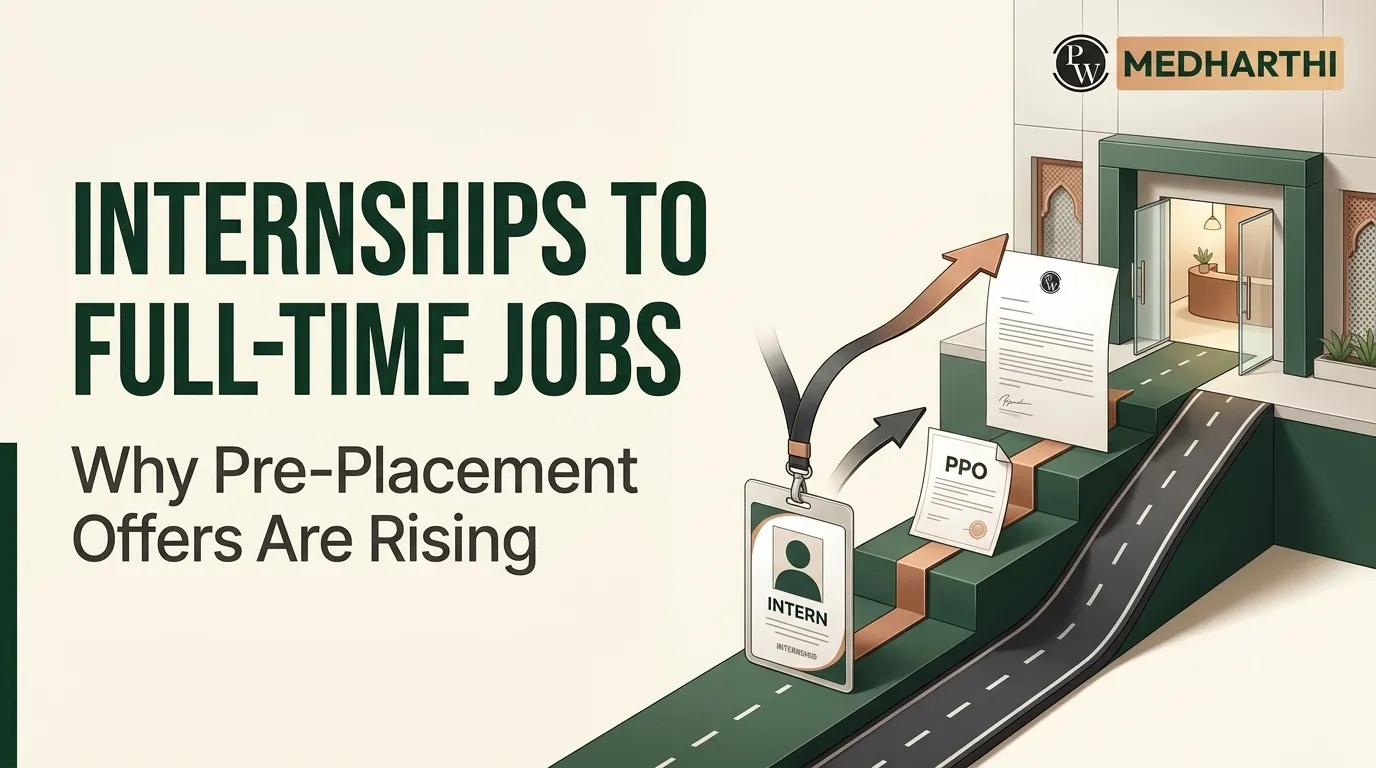
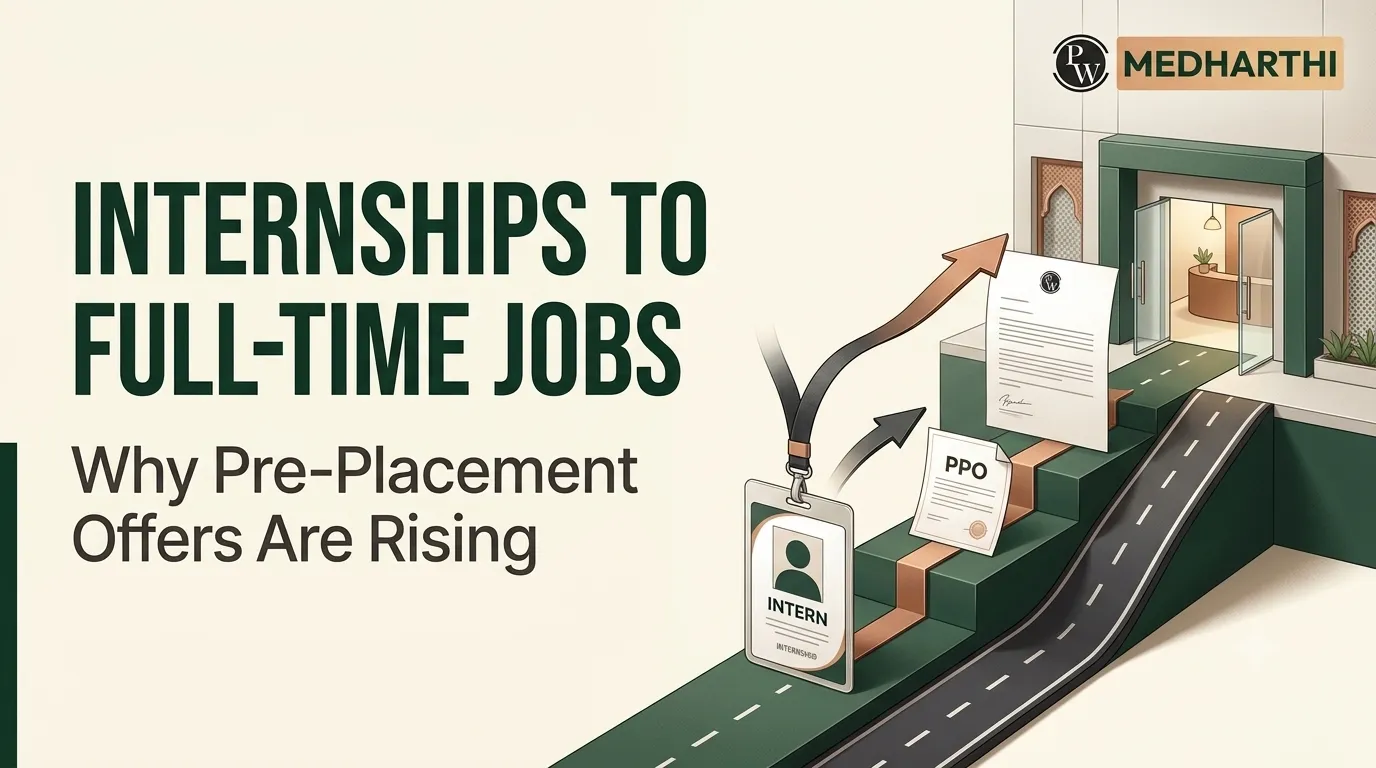
What if your first job offer arrives before your final placement season even begins? For some students, an internship can turn months of real-world work into a direct route to full-time employment. And this route may be gaining momentum:
Deloitte India’s Campus Workforce Trends 2026 report found that internship-to-offer conversions rose by approximately 6% year-on-year.
But here’s the catch: showing up and completing your tasks may not be enough to secure a Pre-Placement Offer (PPO). Employers are looking beyond technical skills to see how you handle feedback, solve problems and learn on the job. So, what separates an intern who gets a PPO from one who leaves with just a certificate and work experience?
THE BIG TAKEAWAY: Internships are becoming a stronger route to full-time employment, but receiving a Pre-Placement Offer (PPO) depends on more than completing an internship. Employers are also looking at how students learn, work with others and respond to real workplace challenges.
Why Are Internships Becoming More Important for Full-Time Hiring?
Employers can use internships to assess a candidate’s workplace performance before making a full-time hiring decision.
Academic scores and interviews offer useful signals, but an internship gives employers a chance to observe how a student approaches actual assignments, responds to feedback and works with a team. It also gives students a clearer picture of the role and the organisation before accepting a full-time offer.
Deloitte’s report reflects this growing focus on internship-led hiring.
PPO conversion rates improved by approximately 6% year-on-year, with gains across the degree categories covered by the survey.
The report also notes that 80% of organisations maintain dedicated campus hiring teams, indicating that early-career recruitment is receiving focused attention.
A PPO can benefit both sides. Employers get more time to assess a potential hire, while students may move from an internship to a job without having to depend entirely on a later placement drive.
THE IMPORTANT DISTINCTION: An internship provides an opportunity to demonstrate your potential. A PPO is the employer’s decision based on that experience and its hiring requirements.
What does the 6% rise in PPO conversions tell us?
It signals that internships are becoming a more useful hiring channel. It does not mean every intern has a 6% higher chance of getting a job, since the reported figure describes the year-on-year improvement in conversion rates, not an individual student’s probability of receiving an offer.
What Do Employers Look for Before Making a PPO?
Behavioural competencies and learning agility can matter as much as technical knowledge when employers decide whom to hire.
Deloitte’s survey highlights two leading predictors of PPO conversion: behavioural competencies, ranked by 75% of employers, and learning agility, ranked by 72%. These ranked ahead of technical competencies, project delivery and assessments in the report’s findings.
This suggests that employers want to know not only whether interns can complete a task, but also how they approach unfamiliar problems, work with colleagues and improve after receiving feedback.
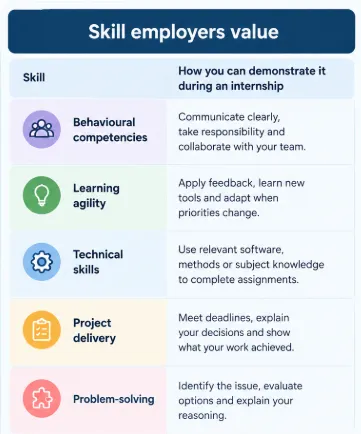
For students, the practical lesson is to treat each assignment as a chance to show how they work. Ask questions when requirements are unclear, keep track of feedback and communicate early if a deadline or task is at risk.
How Is AI Changing Campus Hiring and the Skills Employers Expect?
AI is changing both recruitment processes and the skills employers need from fresh graduates.
Deloitte reports that 86% of organisations said AI or Agentic AI was transforming their recruitment processes.
AI is being used for resume screening, assessments, candidate engagement and predictive hiring, with resume screening the most common reported use case.
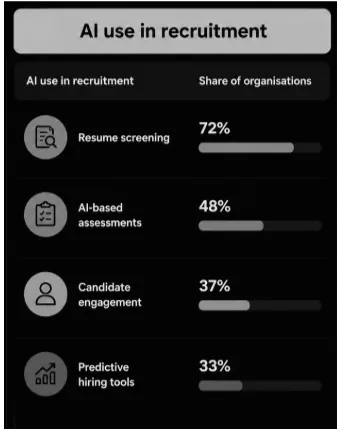
AI is also influencing the roles companies recruit for. The report says 35% of organisations reported that AI adoption was creating new entry-level roles or skill requirements, up from 21% in FY25. AI-aligned campus roles were most prevalent in IT and IT-enabled services, followed by professional services and financial services.
For students, this means preparation should go beyond learning how to use a particular AI tool. You need to understand your field, check AI-generated outputs, explain your decisions and apply technical knowledge to real problems.
Want to stand out in an AI-driven job market? Explore the AI and ML programme by IIM Patna.
Do Internships and PPOs Guarantee Better Pay or Job Security?
A PPO can provide a route to a full-time role, but compensation and career outcomes still depend on skills, specialisation, employer and institute.
The report shows that campus compensation has grown moderately, with a compound annual growth rate of approximately 2–4% across major degree categories between FY22 and FY26.
Pay differences by institute tier remain substantial, and internship stipends can vary even more sharply.
Deloitte also reports that AI and data skills attract hiring premiums of 20–25%, while analytical thinking and problem-solving command premiums of 10–15%.
These are reported pay premiums for relevant skills, not guaranteed salary increases for every candidate who completes a course or internship.
An internship can help you build experience and show that you can contribute to a team, but it cannot erase differences in role availability, pay bands or hiring criteria. Nor does receiving a PPO automatically guarantee long-term retention.
The report does, however, point to improving retention among hires from leading institutes: infant attrition among Top 10 and Tier 1 institute hires declined from 18% to 15%, while one-year attrition fell from 23% to 19%.
For students, the aim should be to use internships to build evidence of their capabilities, not simply to add a company name to their CV.
Don’t Just Complete Your Internship. Make Yourself PPO-Worthy
Treat your internship as an extended opportunity to demonstrate your skills, reliability and willingness to learn.
-
Understand what success looks like: Ask your manager about the expected outcomes, priorities and performance criteria for your role.
-
Keep a record of your work: Track projects, tasks completed, problems solved and feedback received. Use measurable results wherever possible.
-
Ask for feedback early: Do not wait until the internship ends to find out what you need to improve.
-
Build relationships professionally: Communicate clearly, collaborate with colleagues and show that you can take responsibility for your work.
-
Discuss next steps before the internship ends: If appropriate, ask your manager about the PPO process, upcoming vacancies and any skills you should strengthen.
An internship can also help you identify gaps in your knowledge. If you find that a role requires stronger analytical, business or technical skills, consider additional learning alongside your practical experience. For example, Certificate in Business Analytics and Generative AI may be relevant to explore data-driven business roles.
A USEFUL WAY TO MEASURE PROGRESS: Instead of asking only, “Will I get a PPO?”, ask yourself, “Can I demonstrate what I learned, what I delivered and how I improved during this internship?”
Key Takeaways
-
Deloitte India’s Campus Workforce Trends 2026 report says internship-to-offer conversions improved by approximately 6% year-on-year.
-
PPO conversion rates improved across all degree categories covered by the survey.
-
Behavioural competencies (75%) and learning agility (72%) were the leading predictors of PPO conversion cited by employers.
-
AI is changing recruitment processes, while 35% of organisations report that AI adoption is creating new entry-level roles or skill requirements.
-
AI and data skills attract reported hiring premiums of 20–25%, but pay still depends on role, specialisation and institute tier.
-
Students can improve their readiness by seeking feedback, documenting project outcomes, developing relevant skills and understanding their employer’s PPO criteria.
-
An internship can strengthen a student’s path to full-time employment, but it does not guarantee a job offer.
The Bottom Line: Are Internships Becoming a Stronger Route to Full-Time Jobs?
An internship is increasingly an opportunity to prove your readiness for a full-time role, not just a line on your CV.
Deloitte’s findings point to improving PPO conversions and greater employer attention to early-career talent. They also suggest that technical knowledge alone may not be enough: employers are looking for people who can learn quickly, work with others and apply their skills to real assignments. Still, a PPO depends on individual performance and the organisation’s hiring needs.
For students, the most useful approach is to enter internships with clear learning goals, take feedback seriously and leave with evidence of what they can do. As hiring becomes more skills-focused, the experience you gain during an internship could help you make a stronger case for a full-time role.