

Physical AI and Foundation Models for Robotics – Advancing Robotics with Smart AI
 Prashant Pathak3 Aug, 2026
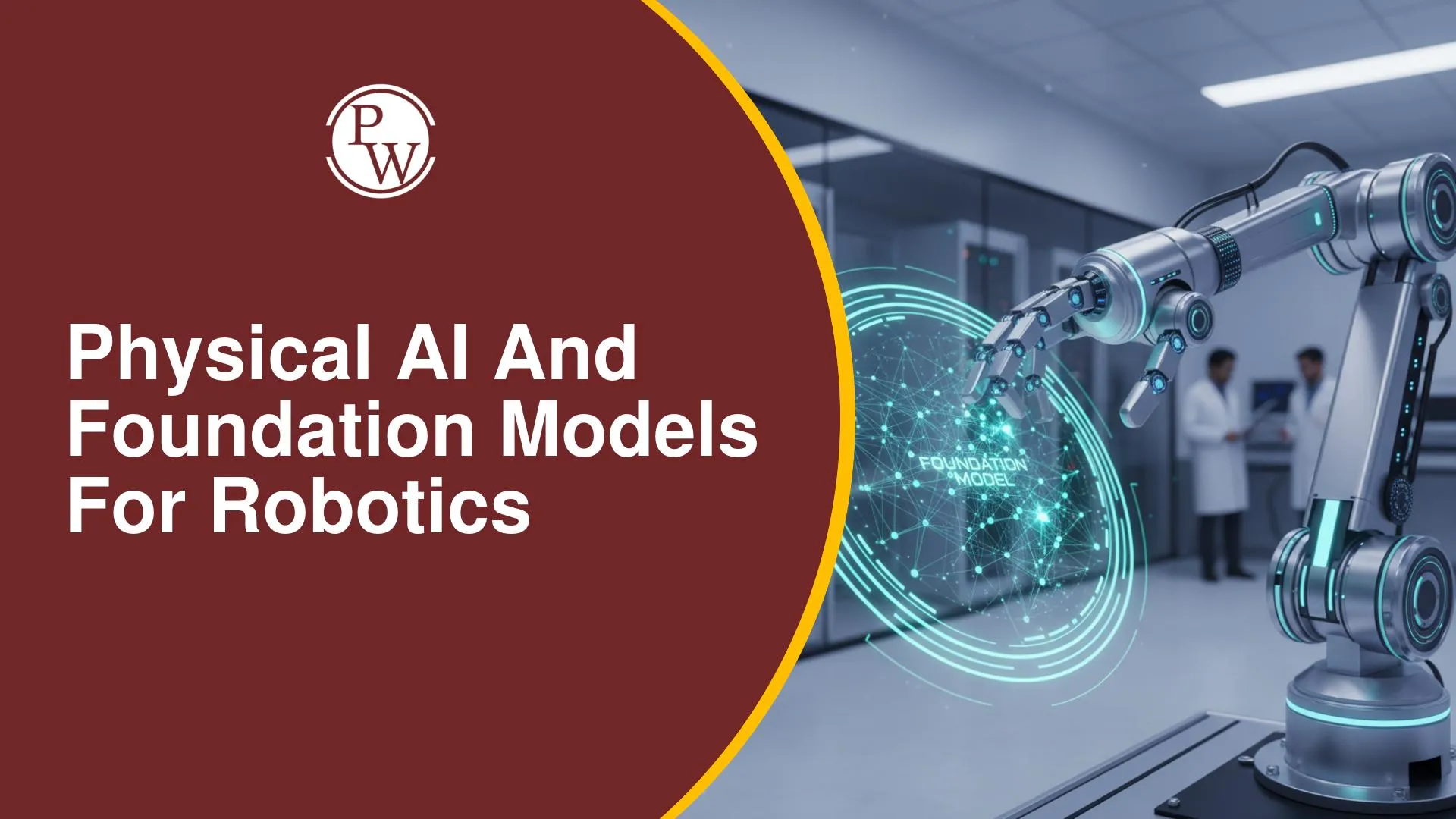
Today, AI often works mainly on screens. However, many real-world tasks, from factory work to household chores, need AI to operate physically. Physical AI and Foundation Models for Robotics are vital for this shift. This field focuses on equipping robots to understand their surroundings and act intelligently. It moves AI from digital processing to tangible interactions, making machines truly useful in our daily lives.
The Need for Physical AI in Robotics
Most real-world problems occur in physical spaces. For AI to be useful, it must do more than process text or images. It needs to perceive its environment and understand how objects behave. Then, it must act based on this understanding through a physical body. Challenges arise because real-world environments are unpredictable. Mistakes in physical actions can have serious consequences.
Evolution from Traditional Robots
Traditional robots follow fixed programs for specific tasks. This approach fails when the environment changes. A factory setup varying daily requires adaptable robots. Research now gives robots general-purpose AI. This AI drives progress in language and vision. This new AI allows robots to learn and adapt. They move beyond rigid pre-programmed routines.
Vision-Language-Action Models (VLAs)
Vision-Language-Action (VLA) models are a key advancement. They combine perception, planning, and action into a single system. Instead of separate parts for seeing, language, and motor control, VLAs use one network. This network converts camera input and language instructions directly into robot movement. Physical Intelligence’s π₀ (2024) and π0.6 (2025) are examples. They perform tasks like folding laundry across different robot platforms. They do this without task-specific retraining. Nvidia’s GR00T models and Gemini Robotics follow a similar path. They train single models to control various robots across different tasks.
Data Challenges and World Foundation Models
The biggest hurdle for these advanced models is data. Language models train on billions of text pages. Robot training data requires either a physical robot doing a task or a high-fidelity simulation. Both methods are slow and costly. World Foundation Models (WFMs) offer a solution. They create synthetic physics data. This lets robots learn without many physical trials. Nvidia’s Cosmos is one example of a WFM. However, VLA technology remains at the research stage. The gap between what these models do in controlled settings and real-world handling is still wide.
| Other Related Links | |
| AI for Science in 2025 – Shaping Future Discoveries | AI Infrastructure Beyond GPUs |
| AI Technical Performance vs Human Performance | AI Diffusion: Measuring Its Reach |
Physical AI and Foundation Models for Robotics FAQs
What is Physical AI?
How do Foundation Models help robotics?
What are Vision-Language-Action (VLA) models?
Why is data a challenge for robot AI?
What are World Foundation Models (WFMs)?