
Creators Could Soon Earn From Their AI Doubles, Not Just Their Content
 Avisha Das23 Oct, 2026
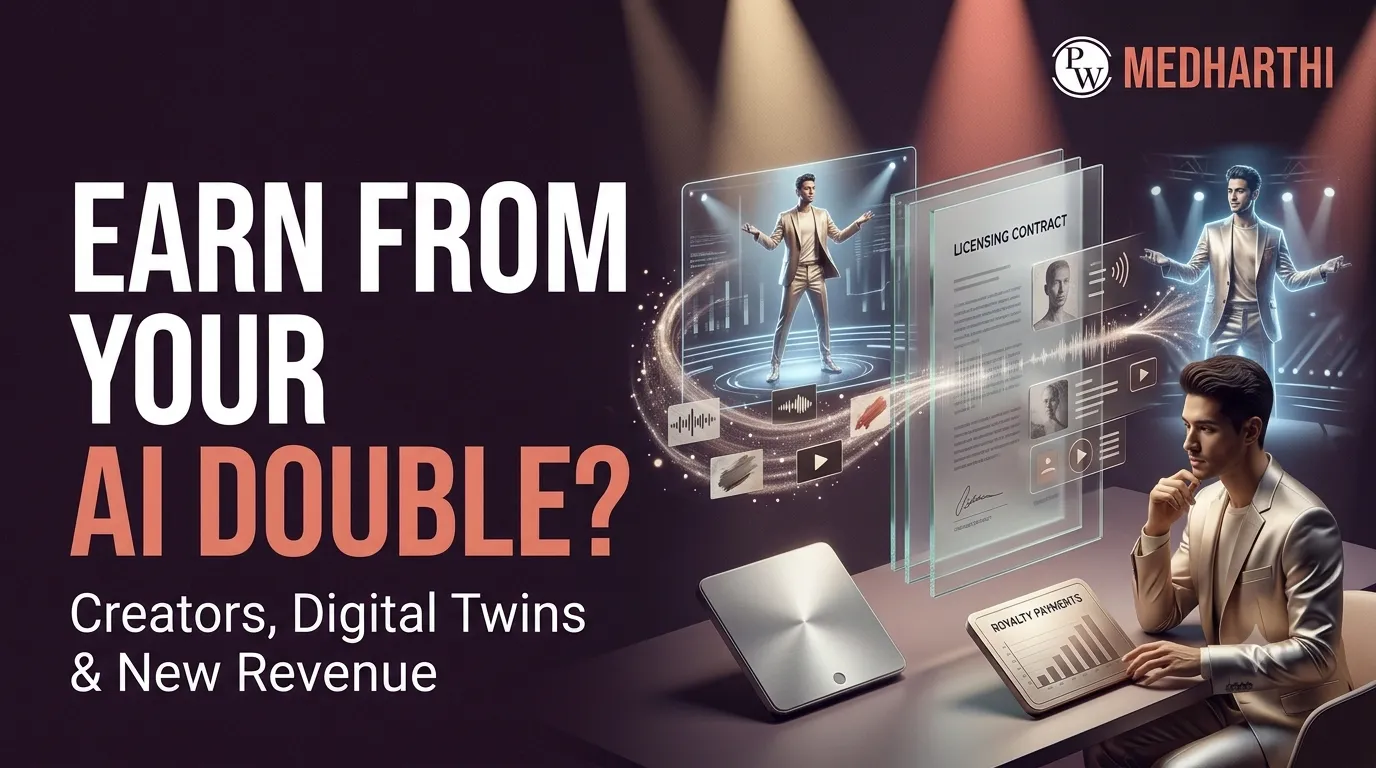
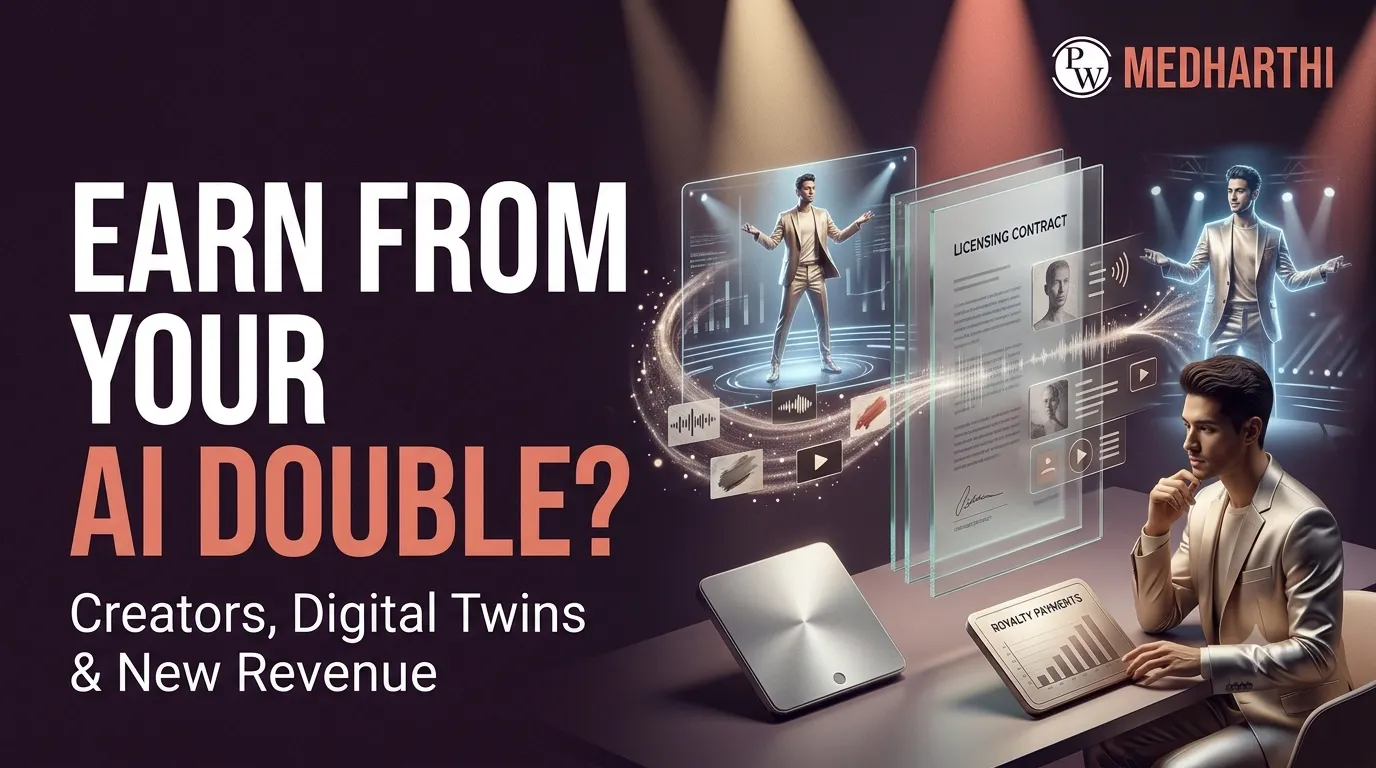
AI identity licensing could create another revenue stream for creators, but consent and control will shape how it develops.
What if your next brand deal didn’t need you to show up for the shoot? Imagine a brand using an approved AI version of you in a campaign while you’re busy creating other content, working on a new project or simply taking a break. Sounds futuristic? AI cloning is opening up this possibility for creators.
For creators, online income often depends on staying visible. Brand deals, platform payouts and sales commissions all require time, content and audience engagement. AI cloning could add another earning avenue by allowing creators to license their face, voice or likeness for specific commercial uses. But there’s a catch: who controls the digital double, where can it appear, and how does the creator get paid?
THE BIG IDEA: AI doubles could help creators earn beyond content and brand deals, provided they retain control over how their identities are used.
For creators building a business around their audience, skills in digital marketing and growth can help connect content, audience and commercial opportunities. The technology behind these changes also makes generative AI and digital marketing increasingly relevant.
From Posting Content to Licensing Your Identity
KEY TAKEAWAY: Identity licensing could become a new income stream, added on top of what creators already earn.
A creator’s income may already come from brand partnerships, platform monetisation and sales commissions. Identity licensing could add another line to that mix. Under this model, a creator could grant permission for an AI-generated version of their identity to be used in an agreed campaign or production.
Sparkonomy co-founder Guneet Singh told The Economic Times that creators could license or lease their identities for content production, earning alongside existing partnerships and commissions.
This would not replace the work of building an audience. Instead, it could create another way to earn from the identity that audience recognises.
WHY IT MATTERS: The potential is additive: creators may be able to earn from approved uses of their likeness as well as from the content they publish themselves.
Explore the best AI courses and start building in-demand skills today. Visit AI Course
Why Brands May Want an AI Double
KEY TAKEAWAY Brands gain potential flexibility in production, and that demand could help create a licensing market.
Producing a campaign can involve coordinating talent, locations, schedules and production teams.
According to Studio Blo co-founder Dipankar Mukherjee, AI cloning can let brands create images and videos of celebrities in different locations and situations to suit a creative brief.
That may give production teams more flexibility, although actual savings will depend on the campaign and licence.
The opportunity may extend beyond a single advertisement. Mukherjee pointed to branded content such as miniseries, microdramas, animated short-form videos, vertical series and longer productions. He expects 2027 to be a pivotal year for AI-led branded content.
That is an industry prediction, not a confirmed timeline for widespread adoption.
The Deal Matters More Than the Clone
KEY TAKEAWAY: The fine print matters as much as the fee. Creators should understand the terms before signing.
A licensing offer should be judged on more than the fee. The agreement needs to spell out how a digital likeness can be used, which platforms and formats are covered, how long permission lasts and whether the creator can approve the final content. Broad or unclear wording can leave room for uses the creator did not expect.
The terms “licence” and “lease” can be used differently across agreements, so creators should not rely on the label alone. They should read the actual terms and seek qualified legal advice if anything is unclear. In particular, pay attention to:
-
Perpetual or open-ended usage rights
-
Permission covering unlimited formats or platforms
-
No clear approval process before publication
-
Unclear payment amounts, timing or usage-based fees
PwC India’s Rajesh Sethi said wider adoption would require standardised licensing terms, verifiable consent, usage monitoring, pricing mechanisms and systems to facilitate payments. These are also useful questions for creators to raise before agreeing to a deal.
|
Before signing, clarify what is being licensed, where it can appear, how long permission lasts, who monitors usage and when payment is due. |
Interested in becoming an AI Engineer? Explore the latest AI Engineer vacancy details and eligibility here. View AI Engineer Job
The 30-Second Risk: When Replication Gets Ahead of Permission
Fast replication creates opportunity, but it also raises the risk of identity misuse.
Singh said an identity can now be replicated within 30 seconds.
This is a claim about the speed of replication, not a guarantee that a commercial-ready digital double can be created and approved in that time. Still, it shows why creators need to think about protection before a problem occurs.
AI-generated deepfakes, voice cloning and face morphing can make it appear that someone said or endorsed something they never did.
For a creator, this can damage audience trust, which is often central to their livelihood. Singh described the potential creator opportunity as similar to the celebrity opportunity but “1,000 times the scale”. That is his projection, not a measured market estimate; the point is that the creator base is much larger than the pool of major celebrities.
THE RISK: The same technology that creates a potential income stream can enable misuse. Permission, monitoring and clear usage limits need to go hand in hand.
Who Is Building the Guardrails?
KEY TAKEAWAY Platforms, contracts, monitoring and legal protection each have a role; no single safeguard is enough.
The market is beginning to develop tools to manage digital identity and control how AI-generated likenesses are used.
-
Creator platforms: Sparkonomy’s Open Creator Graph is designed to let creators specify how AI systems may use their content and likeness.
-
Celebrity tools: Studio Blo’s FAIMOUS enables celebrities to create, control and license their AI clones.
-
Courts: Indian courts have granted interim relief against unauthorised commercial use of identities, including in cases involving Amitabh Bachchan, Arijit Singh and Raj Shamani.
-
Industry standards: Wider adoption will require clear licensing terms, verifiable consent, usage monitoring, pricing mechanisms and payment systems.
A consulting partner quoted in the report describes the shift as turning identity from an attribute used in content production into a licensable digital asset. But making that possible at scale requires systems that protect identities and control their commercial use.
Courts are already part of the picture, but interim relief is only a first step, not a complete rulebook.
Clearer licensing standards and practical safeguards are still needed to help creators and brands understand what consent means, how usage can be monitored and how creators should be compensated.
A Simple Identity Audit to Start This Week
Decide what you will and will not license before a brand makes an offer.
Creators do not need to wait for a licensing offer to decide what they are comfortable sharing. A quick audit can help make those boundaries clear:
-
List your recognisable assets. Face, voice, catchphrases, character and on-screen style.
-
Set your red lines. Write down what you would never allow a digital double to say, promote or appear alongside.
-
Review existing contracts. Check whether they mention digital likeness or AI-generated use, and ask a qualified professional about unclear terms.
YOUR NEXT STEP: Clear boundaries are easier to negotiate than to invent under pressure.
Find more career opportunities across sectors and apply to jobs matching your qualifications. View Job Updates
Key Takeaways
-
A new revenue stream may be emerging. Creators could license approved AI versions of their identities alongside existing income.
-
Brands want flexibility. AI doubles could support campaigns and branded content in multiple formats.
-
The terms are crucial. Creators should clarify consent, scope, duration, approval, monitoring and payment.
-
Protection must keep pace. Fast replication makes identity misuse a concern, while platforms, contracts and legal safeguards can help.
AI doubles could give creators another way to earn from the identity they have built, but the opportunity will depend on control as much as technology. The best starting point is simple: understand what you are licensing, set clear boundaries and make sure the agreement explains how your digital identity can be used.